
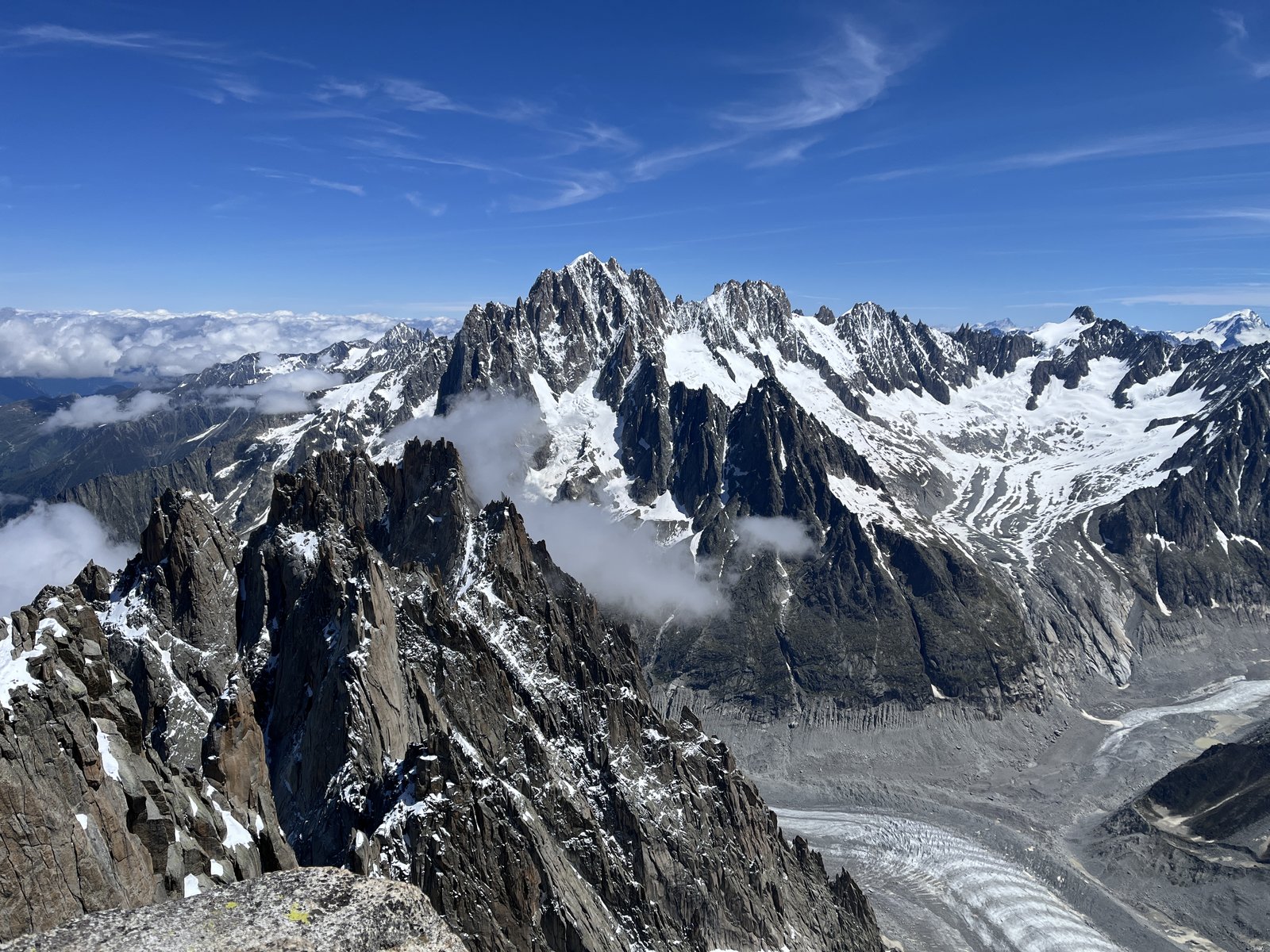
Trip report · Mont Blanc massif
The Midi-Plan Ridge, full traverse
On 11 June 2026 we climbed the Midi-Plan ridge in full — descending to the Requin hut, the Mer de Glace and Montenvers. A little June refreshment, while the valley was already hunting for shade. The story of a magnificent classic… that no longer lets itself be done just any time.
A classic that no longer runs all summer
The Midi-Plan ridge links the Aiguille du Midi (3,842 m) to the Aiguille du Plan (3,673 m), in the heart of the Aiguilles de Chamonix. It’s a line of snow and mixed ground that splits, almost geometrically, the north side from the south side. The atmosphere, needless to say, is guaranteed. It was first traversed in 1907 by Geoffrey Winthrop Young and the guide Josef Knubel.
A few years ago you’d link it all summer without a second thought. Not anymore. Warming has literally transformed this route: it’s now one to do only when conditions are right — firm snow, cool air, a good overnight freeze. On 11 June, they were. A real joy to set off and trace this line.
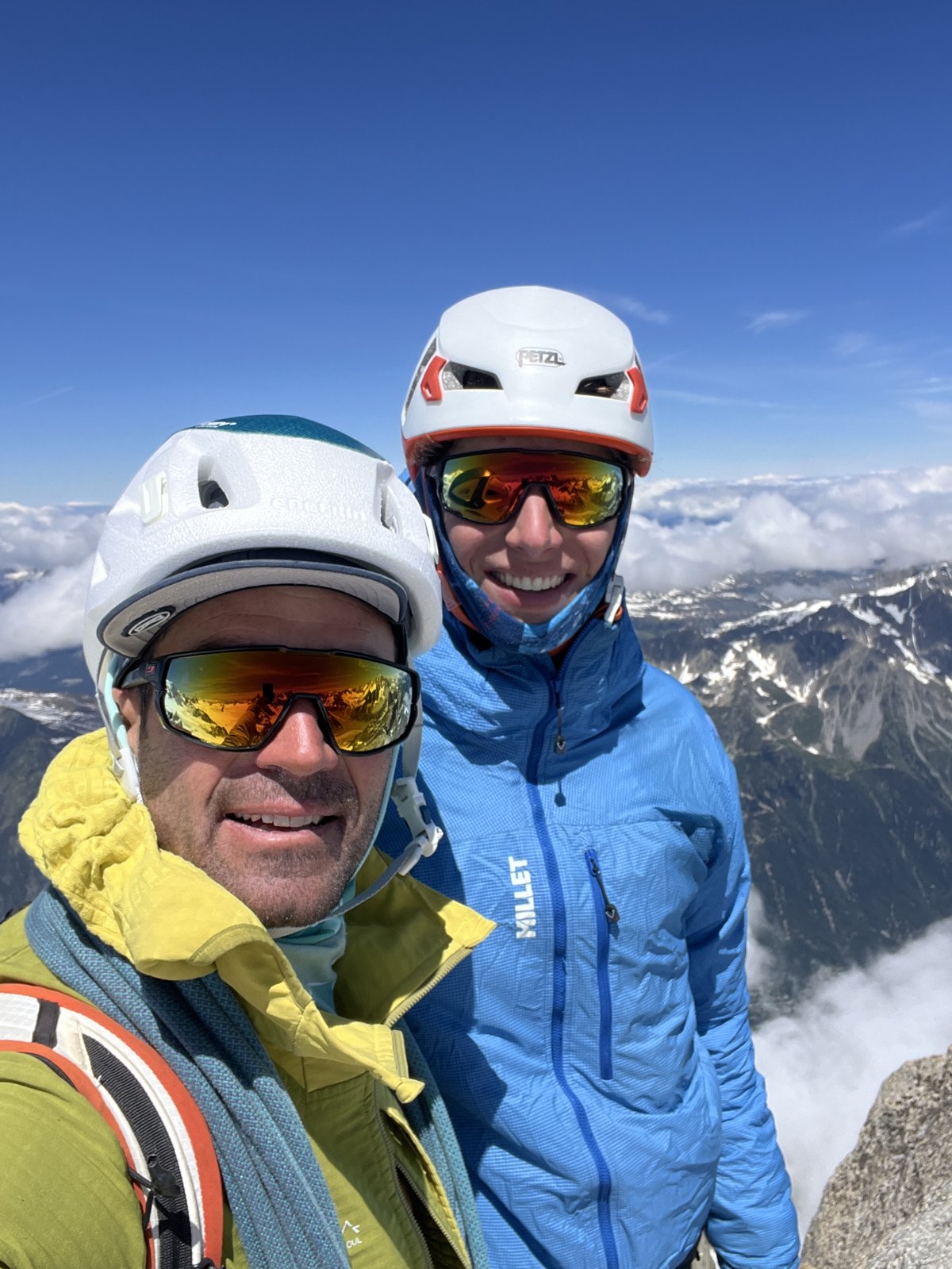
Our climb, 11 June 2026
The first section: obvious and airy
The start is almost self-evident: you follow the ridge, the one that separates the north side from the south side of the Aiguilles de Chamonix. Shade on the left, sun on the right, and beneath your feet, on both sides, the drop. You move along the crest with that mix of focus and pleasure that makes ridge climbing so good.
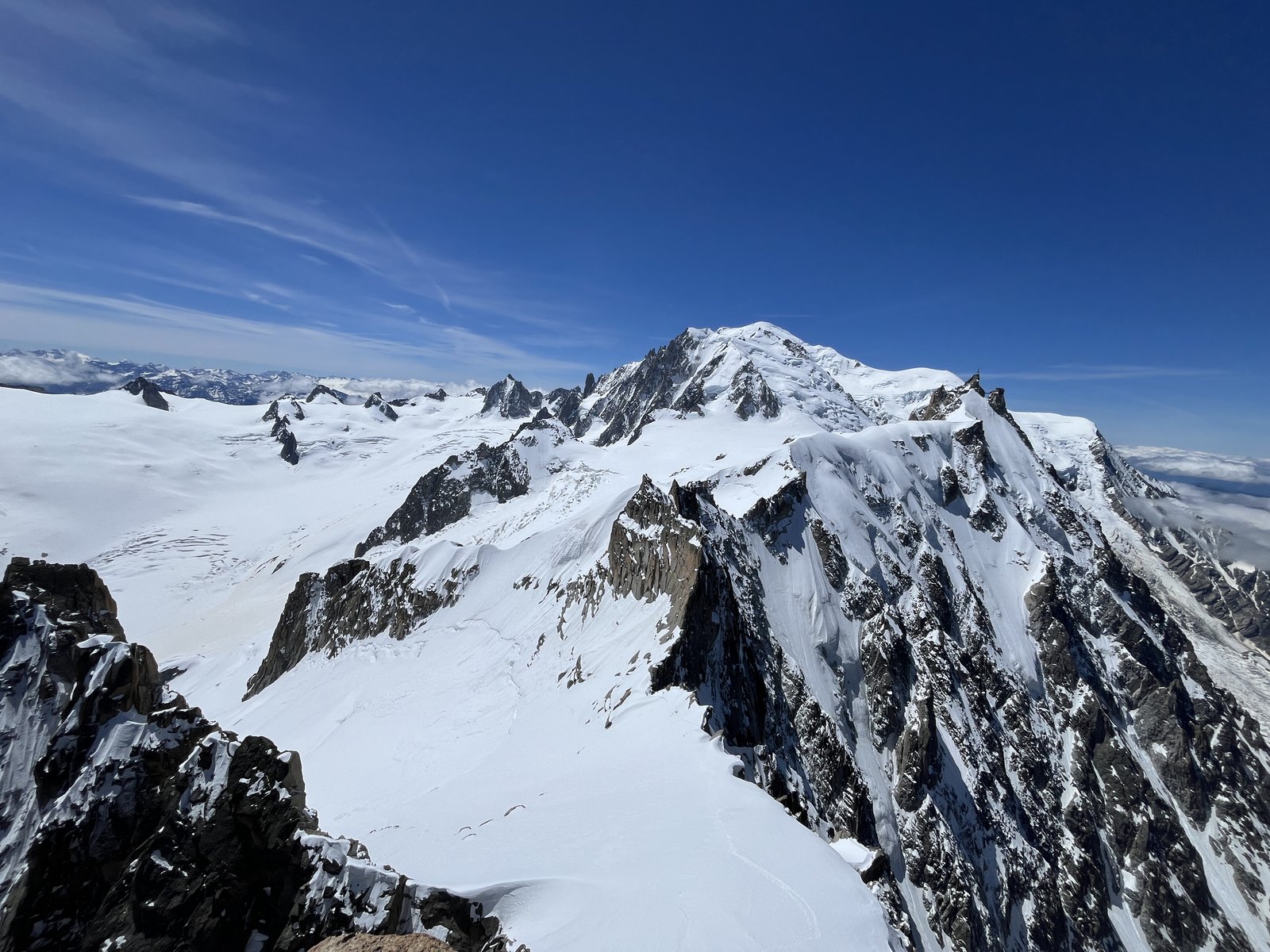
The Rognon du Plan: abseil, then back up
Next comes the abseil down the Rognon du Plan, then the climb back up to the Aiguille du Plan. This is where timing matters: the south slope waits for no one. It heats up fast, and fully transformed snow soon turns treacherous. Translation: it pays to be the early type.
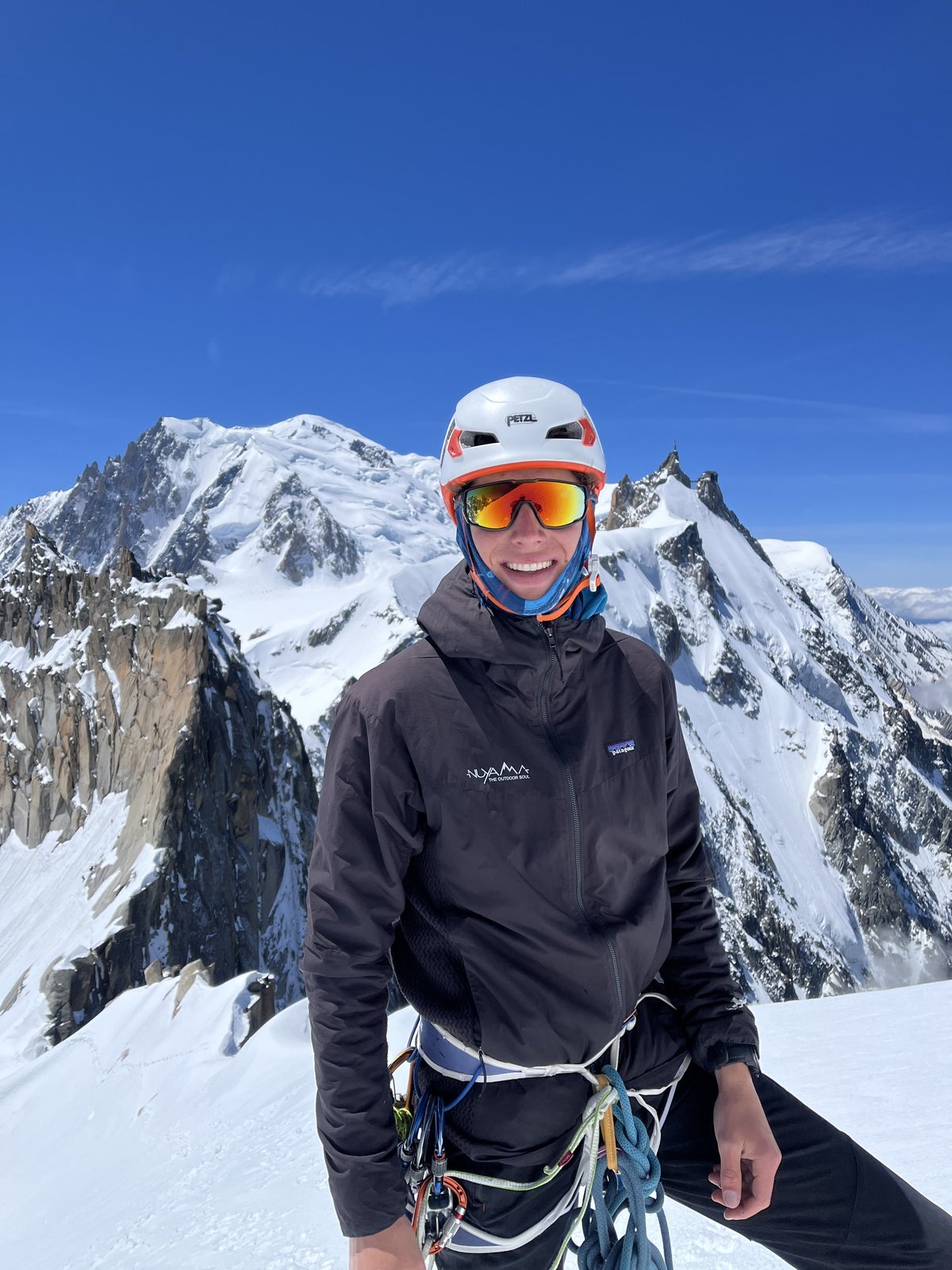
At the summit of the Aiguille du Plan
Summit of the Aiguille du Plan: a magnificent viewpoint, the Mer de Glace winding far below. You savour it — briefly, because what follows is an adventure in its own right.
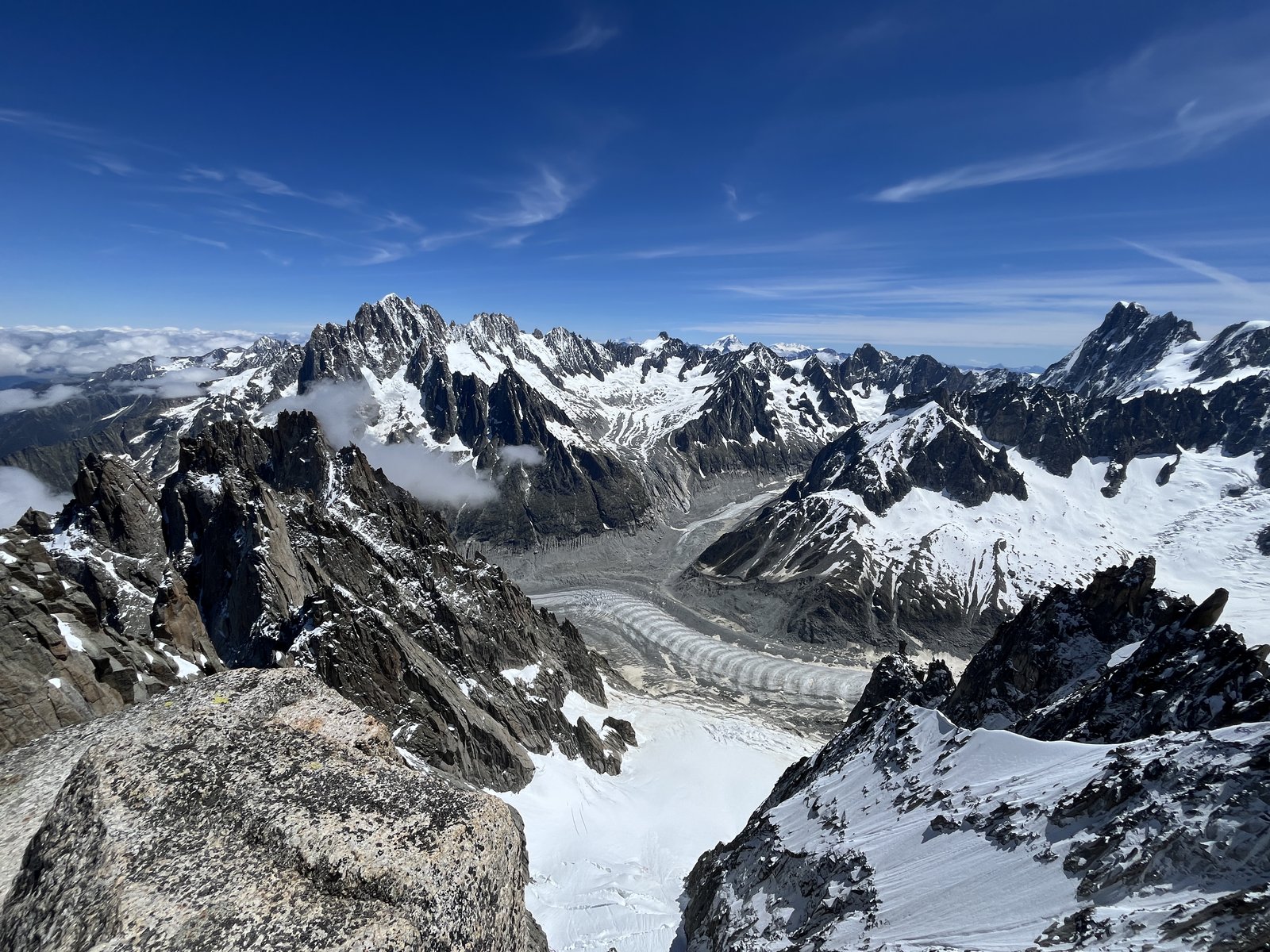
The descent: where the adventure begins
Now you have to find the way down the Envers du Plan glacier, well crevassed. It’s winding, the snow softens quickly because it faces due south, and a few steeper sections call for concentration right to the foot of the glacier. At last you reach the Requin hut — not yet open the day we passed; the terrace, though, was wide open.
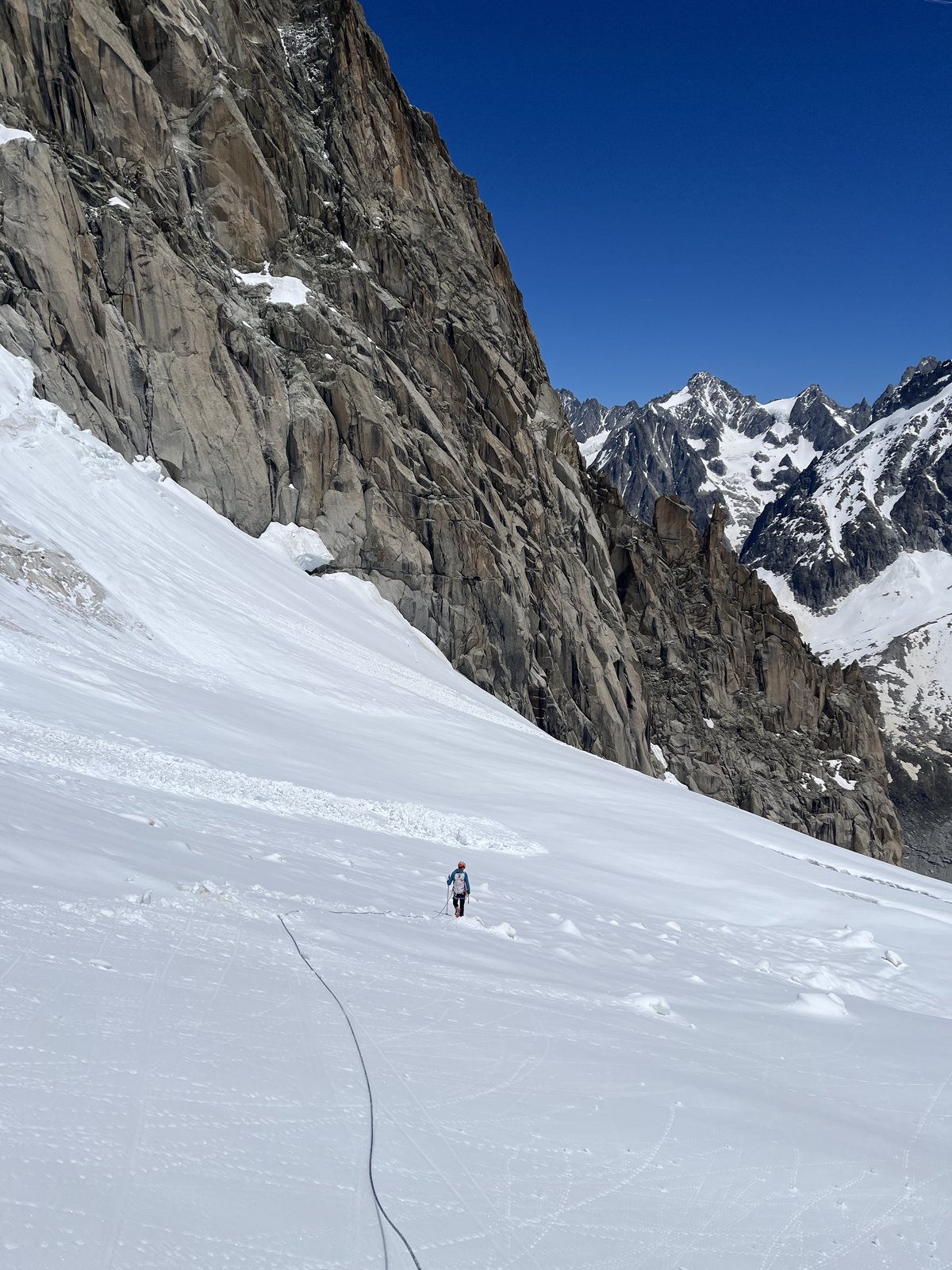
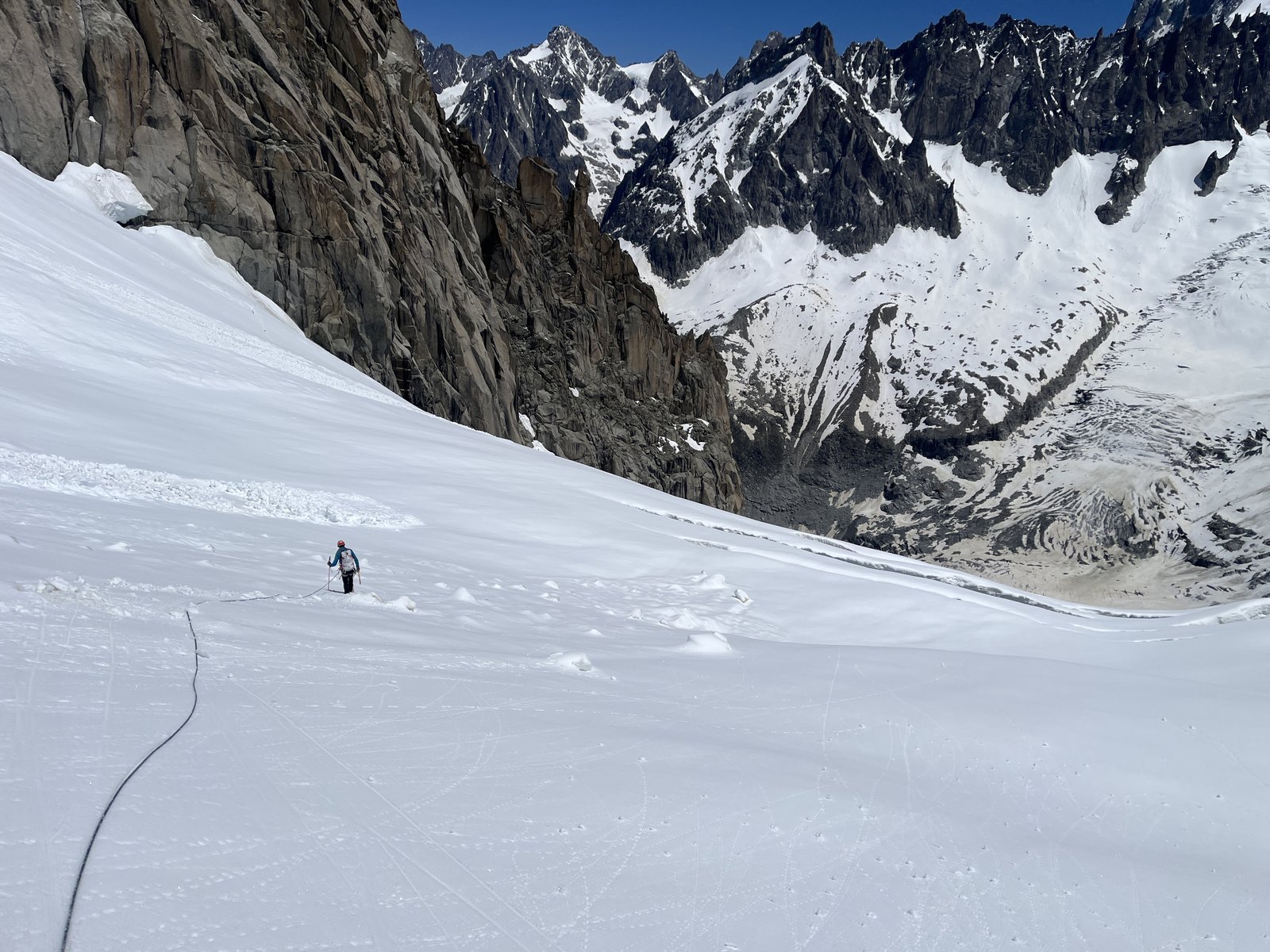
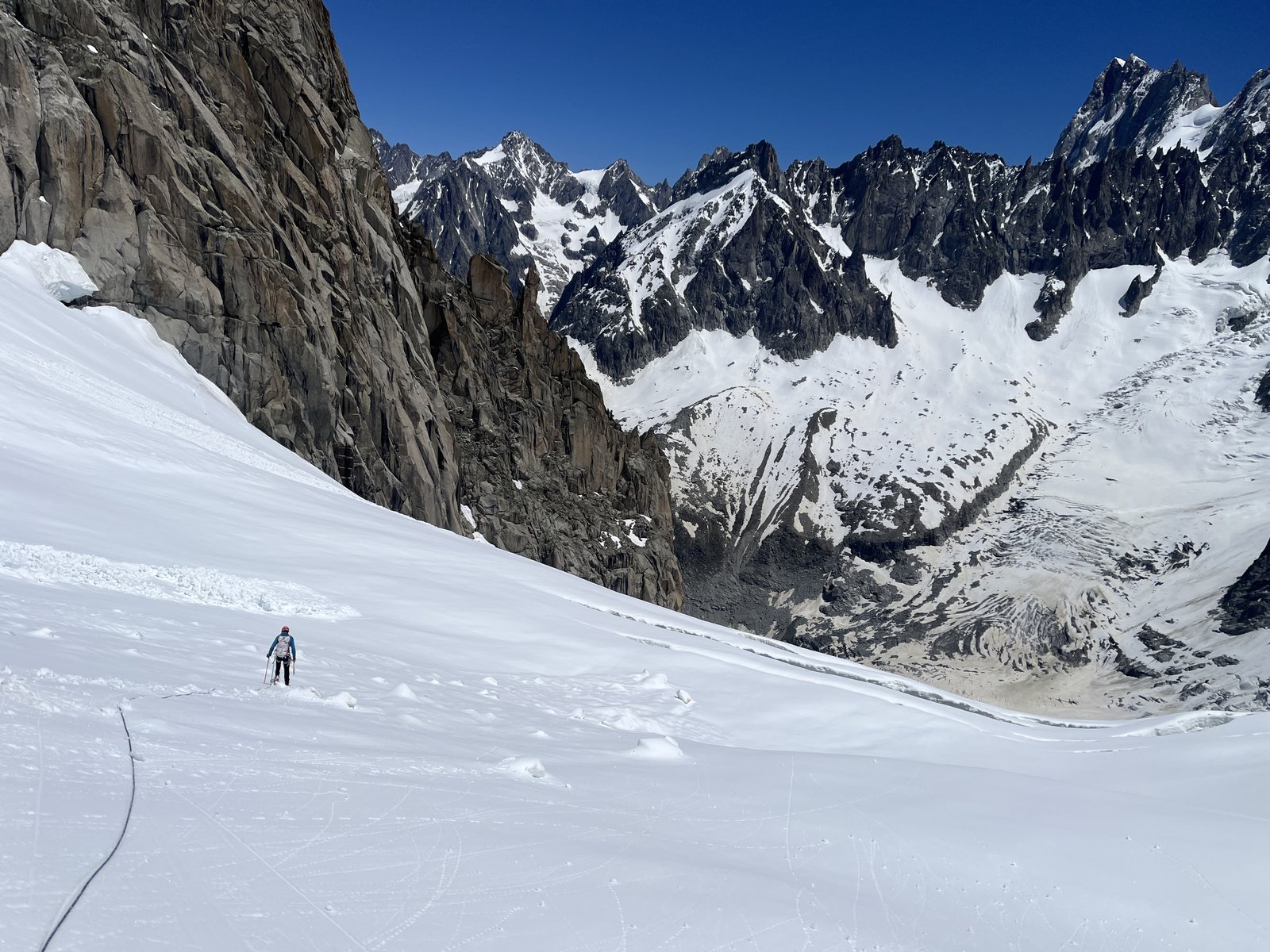
Then the long way back along the Mer de Glace: long, but straightforward, to the Montenvers train. Just enough for your legs to remember the day.
Route facts
| Route | Midi-Plan ridge, full traverse — descent via Envers du Plan, Requin, Mer de Glace, Montenvers |
| Main summit | Aiguille du Plan, 3,673 m — Mont Blanc massif |
| Start | Aiguille du Midi (3,842 m, cable car) |
| Grade | AD — snow and mixed ridge |
| Descent | Envers du Plan glacier (crevassed, south-facing), then the Requin hut |
| Return | Mer de Glace, then the Montenvers train |
| Conditions | Only in good conditions: firm snow, cool air, overnight freeze — best early in the season |
| First traverse | 1907 — G. W. Young and J. Knubel |
| Gear | Ice axe, crampons, rope, a few screws and nuts, abseil kit, helmet. |
A climb like this sums up how we see the high mountains: it isn’t raw difficulty that counts, but reading the conditions and choosing the right moment. That’s how we guide — knowing when to go, and knowing when to turn back.
Frequently asked questions
What is the grade of the Midi-Plan traverse?
The Midi-Plan traverse is graded AD: a snow and mixed ridge. The difficulty lies mainly in the route-finding, the length and the conditions, rather than in any single technical pitch.
When should you do the Midi-Plan ridge?
Once climbable for much of the summer, it now demands good conditions: firm snow and cool temperatures. Early in the season, or after a solid overnight freeze, before the south-facing slope has heated up too much.
What is the descent like?
Down the Envers du Plan glacier (crevassed and south-facing) to the Requin hut, then the Mer de Glace and the Montenvers train. The route through the glacier is anything but obvious: experience, or a guide, makes the difference.
Do you need a guide for the Midi-Plan?
It is a committing high-mountain route where reading the terrain and timing are decisive. Best kept for experienced, self-reliant alpinists, or done with a guide.
Read also: Pic de Bure, Desmaison Route · Lagginhorn, South Ridge
Nuyama is a mountain-adventure agency, born in Chamonix in 2019. You don’t consume a destination here: you live a crossing. From the ridges of the Mont Blanc massif to the 4000ers of the Alps, we go with those who want to experience something real, guided by people rooted in this terrain for years. Discover who we are and mountaineering with Nuyama.