
One Push climbs
One Push
One Summit, One Day.
While the classic route splits the ascent over two days with an overnight stay in a mountain hut, a one push ascent means completing the climb and descent in a single continuous effort, without stopping to sleep along the way. Starting from the valley, we set off at night for the longer ascents and early in the morning for the others.
This approach requires a high level of physical fitness and, for the highest summits, proper acclimatisation. In return, it offers flexibility that a traditional ascent cannot always provide: setting off as soon as a suitable weather window opens, without relying on mountain hut availability, and dedicating just one day of your trip to the climb.
🏔️ One Push Ascents: Climb Alpine Summits in One Day.
At Nuyama, every One Push ascent is led by an IFMGA mountain guide. Our range includes four summits, from your first steps in mountaineering to the Lion Ridge on the Matterhorn.
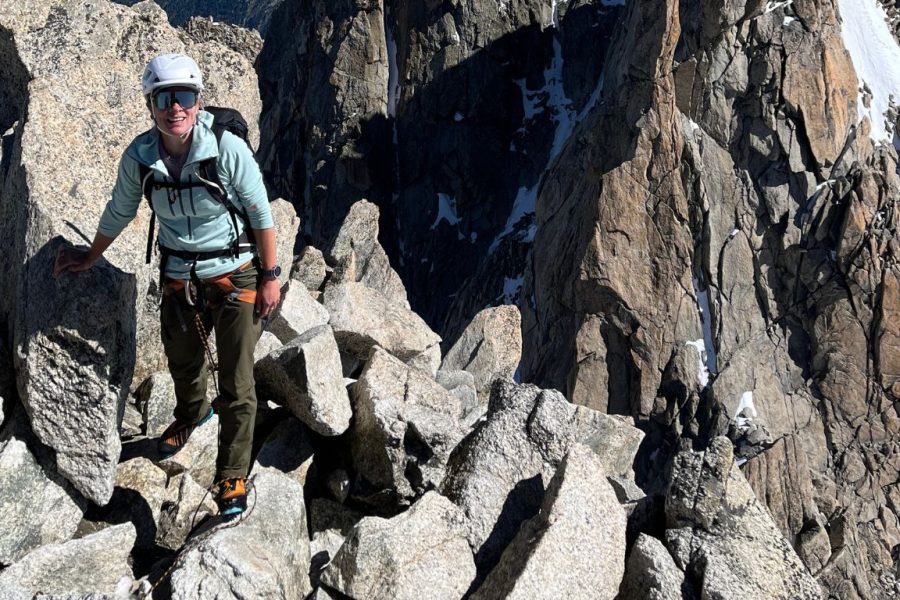
Aiguille du Tour in one day — 3,542 m
The ideal first mountaineering summit in the Mont Blanc massif, offering a complete alpine experience: glacier travel, a mountain pass, a bergschrund and a short rocky ridge, starting from the hamlet of Le Tour.
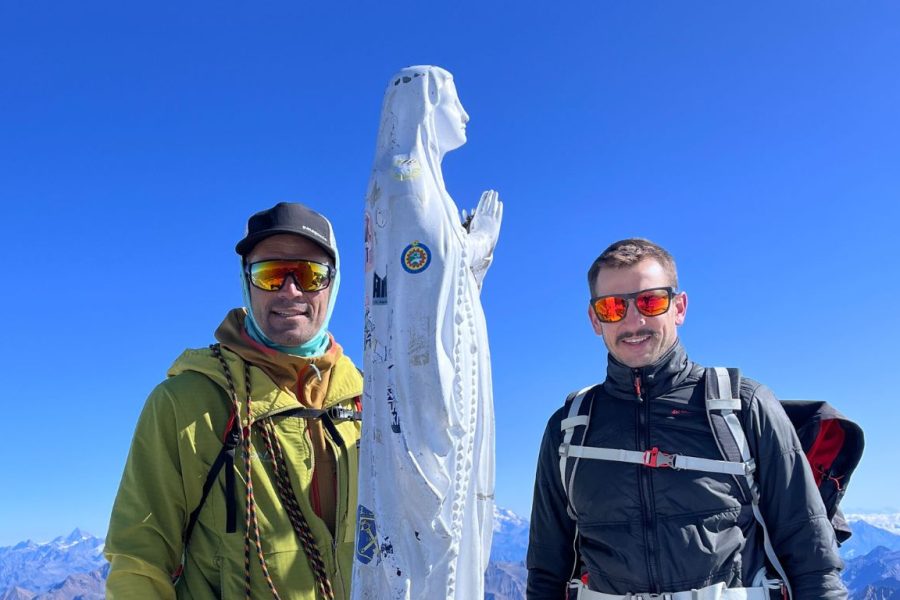
Gran Paradiso in one day — 4 061 m
The only summit over 4,000 m located entirely in Italy, in the heart of Gran Paradiso National Park. With no major technical difficulties, it’s the ideal first 4,000-metre peak. Transfer from Chamonix included.
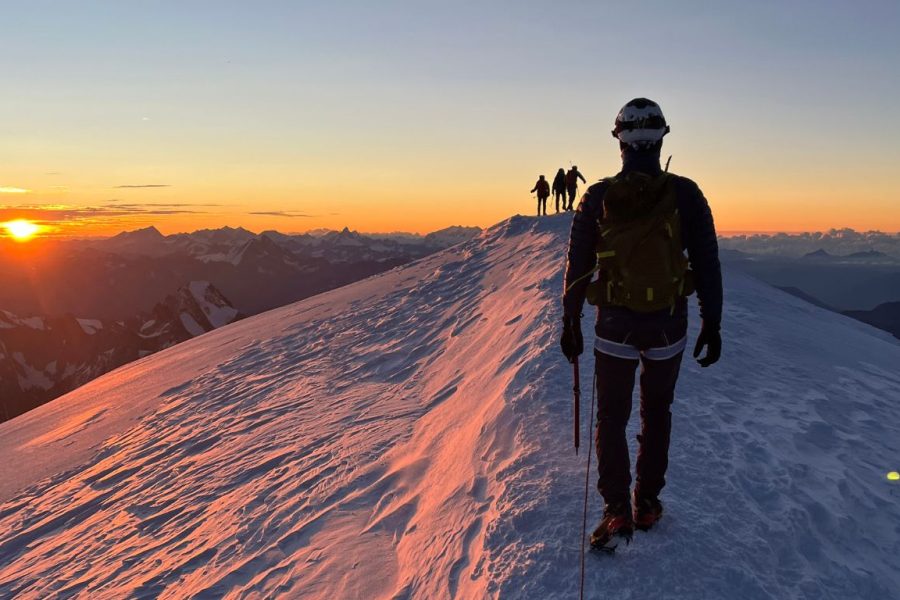
Mont Blanc in one day — 4,808 m
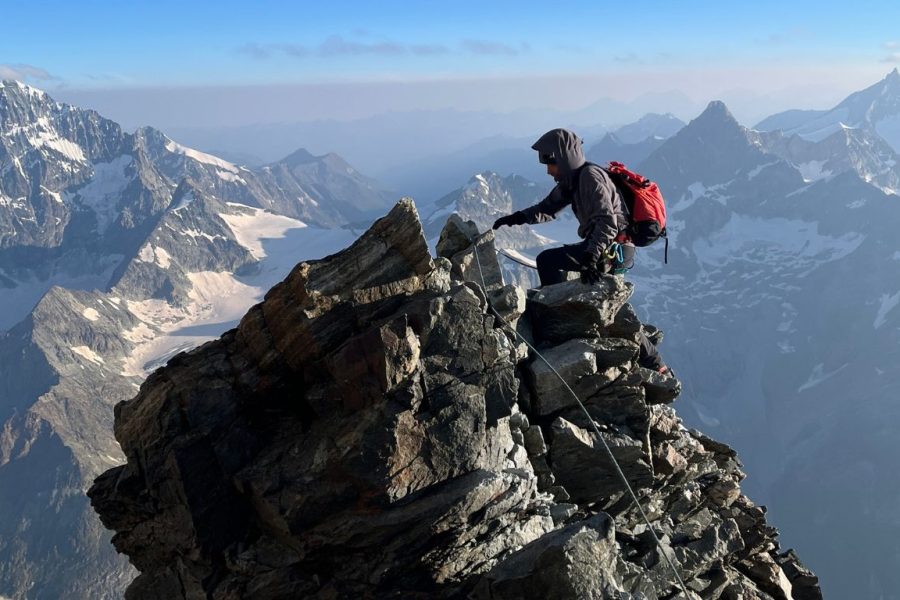
Matterhorn via the Lion Ridge — 4,478 m
The Italian route up the Matterhorn, more technical than the Hörnli Ridge: rock climbing, mixed terrain, fixed ropes and the Jordan Ladder. Setting off from Breuil-Cervinia at night, reaching the summit and descending in a single continuous push. For experienced mountaineers.
Ski dans les Alpes
One Push
One push or traditional ascent?
| Single push (in a day) | Standard climb |
Duration | One day of effort, from a full day to 24 hrs depending on the summit | Two days, with a hut night on the route |
Huts | None to book | Often booked far in advance |
Rhythm | Continuous | Split into two stages |
Weather flexibility | Departure set by the best window | Depends on hut availability |
Profile | Fit climbers, acclimatised for 4,000 m peaks | Less demanding physically |
Recovery | A night’s rest in the valley afterwards | More gradual |
📈 Which ascent should you choose?
| Aiguille du Tour | Gran Paradiso | Mont Blanc | Matterhorn |
Altitude | 3,542 m | 4,061 m | 4,808 m | 4,478 m |
Start | Le Tour (1,480 m) | Pont Valsavarenche (1,960 m) | Les Houches (1,008 m) | Breuil-Cervinia (2,006 m) |
Departure time | 4–6 am | 4–6 am | 8 pm–midnight | 8 pm–midnight |
Ascent | +2,100 m | +2,100 m | +3,800 m | ≈ +2,500 m |
Duration | Full day | Full day | 18–24 hrs | [TBC] |
Physical | 3/5 Committed | 4/5 Athletic | 5/5 Elite | [TBC] |
Technical | 3/5 Practised (PD) | 2/5 Introductory (F) | 3/5 Practised (PD) | 4/5 Advanced (AD+) |
People per guide | 2 to 4 | 2 to 6 | 1 to 2 | 1 to 2 |
Mountaineering experience | Not required | Not required | Expert | Advanced |
From | €385 | €460 | €1,120 | €[TBC] |
FAQ - One Push
One Push
A one push ascent involves climbing to the summit and descending back to the valley in a single continuous effort, without the overnight stay in a mountain hut that usually breaks up the traditional route. You set off at night or very early in the morning.
The success of a one push ascent largely depends on how well you prepare beforehand. Three key elements matter:
Endurance. Build up your stamina over several weeks with long mountain hikes involving significant elevation gain, maintaining a steady pace.
Acclimatisation. For summits above 4,000 m, spend several days between 2,500 and 3,500 m in the lead-up to your ascent. Above 4,000 m, everyone responds differently to altitude.
Technical skills. Depending on the route, you should feel comfortable using crampons, moving along ridges or climbing on rocky terrain. For the Aiguille du Tour and Gran Paradiso, your guide will teach you the necessary techniques along the way.
There’s no difference. All three terms refer to the same type of ascent. “Single push” is the most commonly used expression in English.
Four: Aiguille du Tour (3,542 m), Gran Paradiso (4,061 m), Mont Blanc (4,808 m) and the Matterhorn via the Lion Ridge (4,478 m).
Rope teams tailored to each ascent. One or two climbers per guide on Mont Blanc and the Matterhorn, with larger groups on less demanding routes.
No groups of strangers on the longest ascents. Over 18 hours of effort, differences in fitness and ability can lead to frustration or force the entire rope team to turn back.
A rope team stays together. If one participant has to turn back, the entire rope team descends.
Knowing when to turn back. Your guide will adapt or stop the ascent if the weather, mountain conditions or your physical condition require it. This approach to safety is what makes these challenging ascents possible.
In-depth knowledge of the mountains. Our guides have led more than 40 Mont Blanc ascents and have over 25 years of experience in the massif.
Not for Aiguille du Tour or Gran Paradiso: your guide will teach you the necessary techniques along the way. Mont Blanc and the Matterhorn, however, require solid high-altitude mountaineering experience.
Technical level | What it means |
2/5 — Introductory | Lightly crevassed glacier, basic crampon and ice axe use, graded F (facile, “easy”). |
3/5 — Practised | Technical glacier, snow and ice slopes up to 45°, grade II rock, graded PD (peu difficile, “not very difficult”). |
4/5 — Advanced | Exposed mixed terrain, ice up to 55°, grade III rock, fixed ropes, graded AD (assez difficile, “fairly difficult”). |
Physical level | What it means |
3/5 — Committed | Long day, 1,500 to 2,500 m of ascent, serious fitness. |
4/5 — Athletic | Intense effort, 2,500 to 3,500 m of ascent and/or high altitude, regular training. |
5/5 — Elite | Extreme continuous effort, more than 3,500 m of ascent, exceptional fitness. |
You’re new to mountaineering: Aiguille du Tour offers a complete introduction to mountaineering in the Mont Blanc massif.
You’re aiming for your first 4,000-metre peak: Gran Paradiso has no major technical difficulties but is physically demanding.
You want to climb the highest summit in the Alps: Mont Blanc in one day is for mountaineers with exceptional endurance.
You’re looking for a challenging technical ascent: The Matterhorn via the Lion Ridge is for experienced mountaineers.
These four ascents also offer a natural progression: Aiguille du Tour, followed by Gran Paradiso, then Mont Blanc or the Matterhorn. If you’re unsure which to choose, get in touch. We’ll give you an honest assessment of which ascent best suits your level.
Technically, Gran Paradiso is the easiest (graded F). Physically, Aiguille du Tour is the least demanding, with a difficulty rating of 3/5 and a summit at 3,542 m.
Yes, for summits above 4,000 m. Spending several days between 2,500 and 3,500 m during the preceding week significantly increases your chances of success and reduces the risk of acute mountain sickness.
It depends on the ascent: one to two climbers on Mont Blanc and the Matterhorn, two to four on Aiguille du Tour, and up to six on Gran Paradiso.
Between 8 pm and midnight for Mont Blanc and the Matterhorn, which involve the longest ascents. Between 4 am and 6 am for Aiguille du Tour and Gran Paradiso.
From mid-May to mid-September, depending on the summit; July and August for the Matterhorn. The exact date is agreed with your guide, based on the weather and mountain conditions.
Planning a one-day summit ascent?
Tell us about your mountaineering experience, fitness level and preferred dates. We’ll discuss your plans with you to help choose the right ascent and put together a preparation plan tailored to you.